Cristiano Ronaldo’s World Cup Silence Raises the Question Portugal Can No Longer Avoid
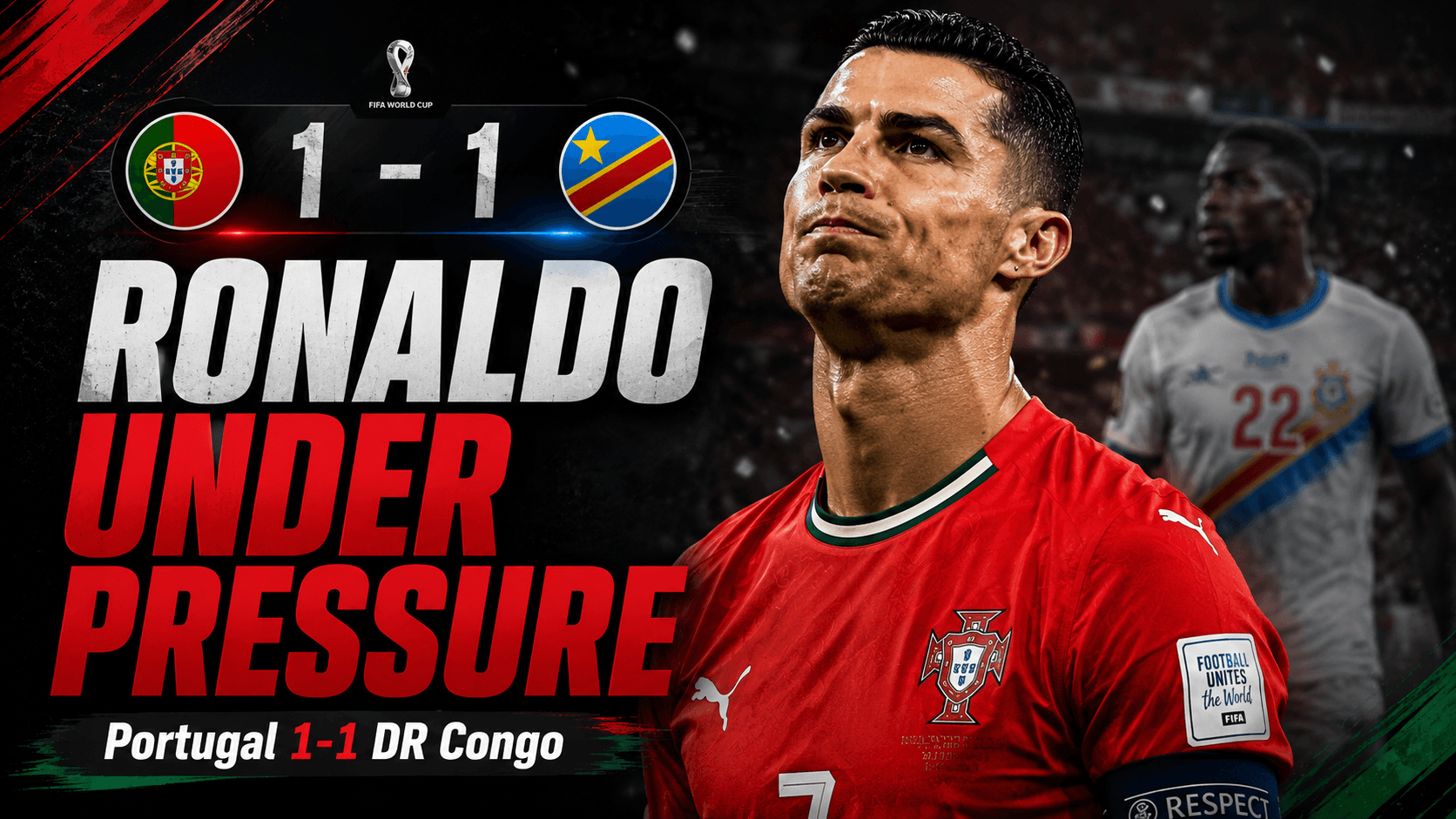
Cristiano Ronaldo has built a career out of answering doubts with goals. But after Portugal’s flat 1-1 draw against DR Congo, the uncomfortable question is no longer whether Ronaldo still has greatness in him. It is whether Portugal can still afford to build their biggest moments around waiting for it.
Portugal arrived at the 2026 FIFA World Cup with one of the deepest squads in the tournament. Bruno Fernandes, Bernardo Silva, Joao Neves, Pedro Neto, Rafael Leao, Vitinha — this is not a team short of creativity, movement, or technical class. Yet against DR Congo, Portugal often looked less like a modern attacking machine and more like a side caught between two eras.
The result itself was damaging enough. Portugal took an early lead through Joao Neves, only to allow Yoane Wissa to equalise before half-time, giving DR Congo a historic World Cup point. But the bigger concern was the performance: Portugal dominated possession, yet failed to turn control into clear danger.
After Neves’ early opener, Portugal struggled to build sustained attacking pressure. The rhythm disappeared, the tempo dropped, and the final third became predictable. For a team filled with elite creative players, the lack of cutting edge was impossible to ignore.
And at the centre of the debate, inevitably, was Ronaldo.
Ronaldo’s Legacy Is Untouchable — But Portugal’s Problem Is Tactical
At 41, Ronaldo remains one of the major stories of the tournament simply by starting. This is his sixth World Cup, a testament to his discipline, longevity, and almost absurd competitive hunger. Very few footballers even reach this stage of their career. Fewer still do it as a starter for a nation with Portugal’s talent.
But history does not press defenders. Reputation does not create separation in the box. Legacy does not guarantee sharpness.
Against DR Congo, Ronaldo looked isolated, frustrated, and increasingly disconnected from the rhythm around him. He still made himself available in dangerous areas, but the explosiveness that once defined his game was less visible. The sharp movement, the burst across defenders, the ability to turn half-chances into panic — those moments were harder to find.
That is where Portugal’s issue becomes more tactical than emotional.
Ronaldo remains one of football’s greatest finishers. Give him clean service, space, and one decisive moment, and he can still punish a defence. But international tournament football is often cruel to ageing strikers. The spaces are smaller. The defenders are quicker. The pressing is more intense. The margins are thin.
A forward who once bent games through explosive movement now needs the game to bend toward him.
Portugal did not manage that against DR Congo.
Portugal Looked Caught Between Two Eras
There were moments when the team seemed unsure whether to play through Ronaldo, around Ronaldo, or beyond Ronaldo. Crosses came without conviction. Midfield possession became sterile. Wide players hesitated between attacking the line and looking early into the box.
The result was a team full of creators but short of actual creation.
This is not simply a Ronaldo issue. Bruno Fernandes and Bernardo Silva also had quiet games. Portugal’s tempo dropped badly after the early goal. DR Congo defended with aggression, belief, and discipline, forcing Portugal into uncomfortable areas and denying them rhythm in central zones.
But Ronaldo changes the conversation because Ronaldo changes the structure of the team.
A younger Ronaldo could stretch defences, attack channels, win races, and manufacture shots from almost nothing. The current Ronaldo is different. He is more fixed, more dependent on supply, and more reliant on timing inside the box.
That can still be valuable — but only if Portugal build a system that creates volume around him. Against DR Congo, they did not.
The Question Roberto Martinez Must Now Answer
The debate now is uncomfortable but necessary: should Roberto Martinez continue with Ronaldo as the guaranteed starting point of Portugal’s attack, or should he use him more selectively?
That question is not disrespect. It is elite football.
Portugal are not a nostalgia project. They are a World Cup contender. Their squad is too strong to be trapped by sentiment, even sentiment earned by one of the greatest players the sport has ever seen.
Ronaldo deserves respect for everything he has given Portuguese football. But Portugal also owe themselves honesty.
The warning signs are not new. Ronaldo has continued to score goals at club and international level, but major tournament football is a different test. It is faster, tighter, more physical, and less forgiving. The question is no longer whether Ronaldo can still score. The question is whether Portugal are creating the right conditions for the team to perform at its maximum level.
Ronaldo Can Still Be a Weapon — But the Role May Need to Change
Ronaldo’s tournament is not over. Portugal’s World Cup is not over. One draw does not destroy a campaign, and writing off Cristiano Ronaldo has historically been a dangerous business.
But the first match has changed the mood.
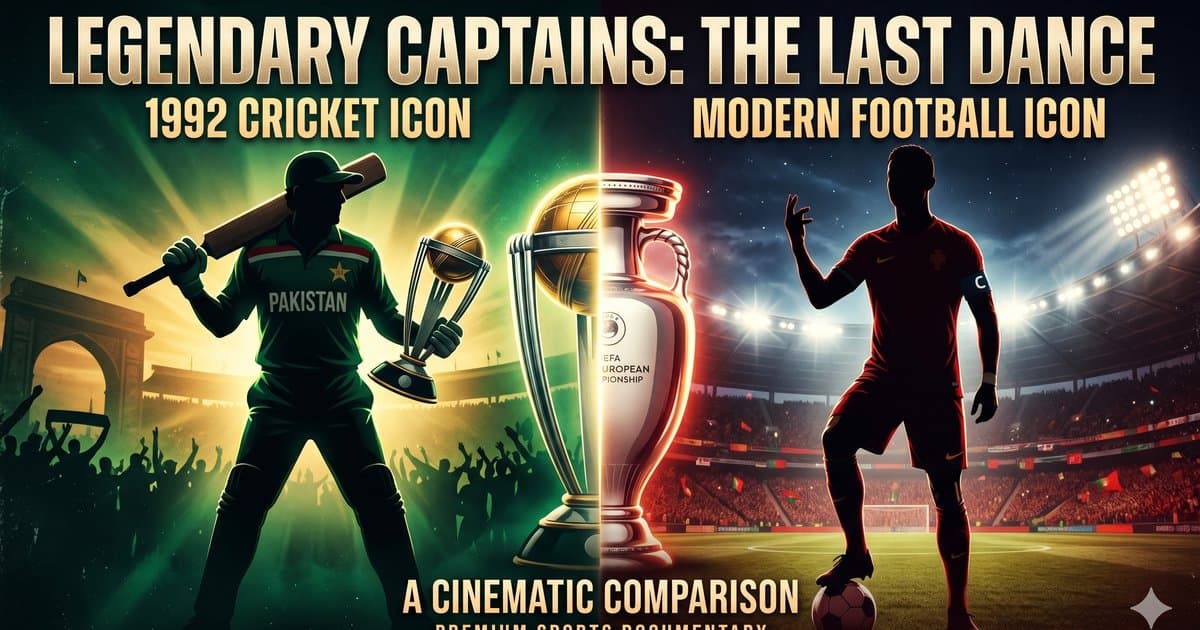
Before the tournament, Ronaldo’s sixth World Cup was framed as one final dance — a grand last chance to win the only major trophy missing from his legendary collection. After DR Congo, the story has sharpened.
This is no longer just about whether Ronaldo can produce another iconic moment. It is about whether Portugal can find the courage to evolve while still carrying their most famous player.
That balance will define their tournament.
If Martinez gets it right, Ronaldo can still be a weapon: a late-game finisher, a penalty-box predator, a leader whose presence matters without forcing the entire attack to orbit around him.
But if Portugal continue to play as if this is still 2016 or 2018, they risk wasting one of the most gifted squads in the competition.
Portugal Must Stop Waiting for the Past to Save Them
Ronaldo’s greatness is secure. Nothing that happens in 2026 can erase the goals, the trophies, the records, or the nights when he dragged Portugal through danger by sheer force of will.
But World Cups are not won by memory.
They are won by legs, balance, timing, and ruthless decisions. After Portugal’s 1-1 draw with DR Congo, the biggest issue is no longer whether Cristiano Ronaldo can still make history.
It is whether Portugal are brave enough to stop waiting for the past to save them.